With Charity for “NONE”
It Starts with Empathy or it Ends with Total War - Originally Posted on LinkedIn July 6, 2020

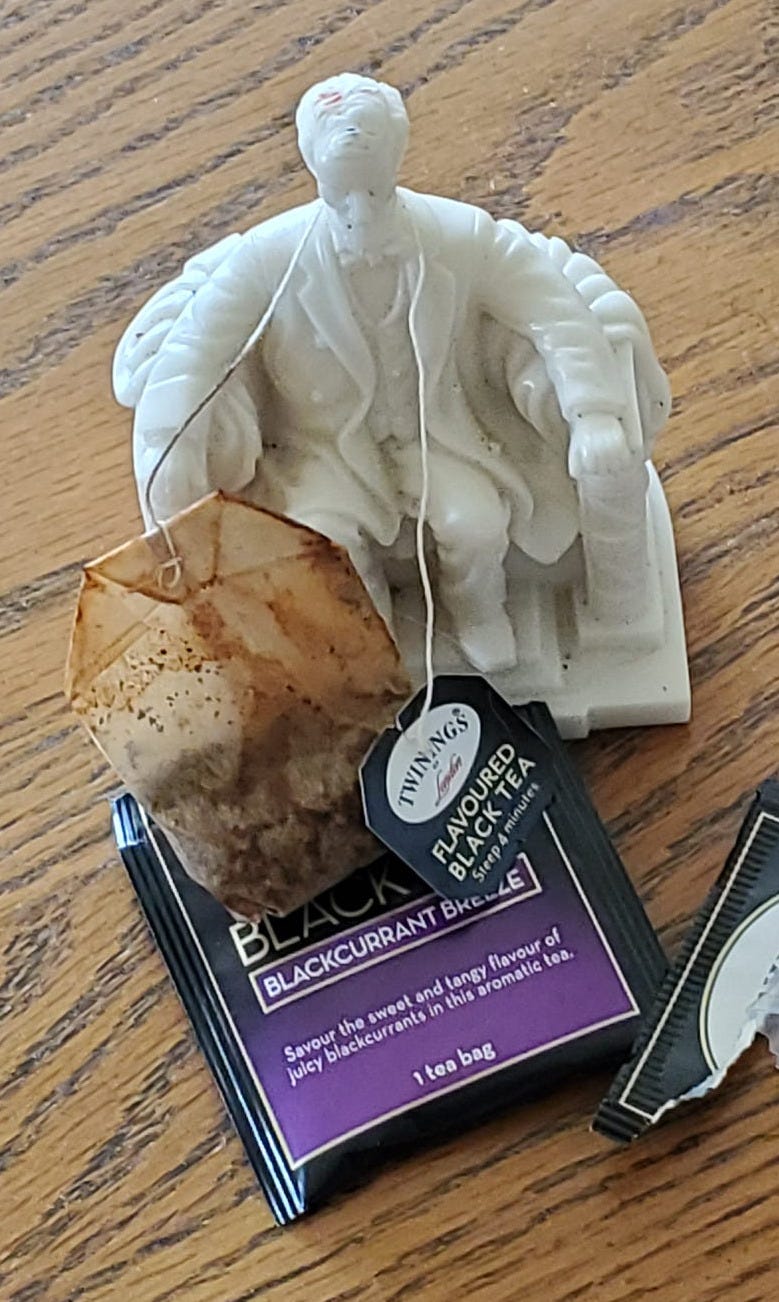
And we’re driving home
And the radio plays
“What’s Going On”
Marvin Gaye
Is it right on red
Or left on MLK?
I look ahead and realize
We’ve lost our way
Hey mister, where’s the road to Yasgur’s Farm?
He stares at me with pity and alarm
Says, “That crowd left here long ago
Scattered all to Hell and Harpers Ferry
On the 6th of January”
Sung by Amy Grant, written by Sandra Emory Lawrence
Maybe song lyrics are the only way to step back from our long crisis and get perspective. We have lost our way, and it is going to take a lot more than references to Marvin Gaye, Joni Mitchell, and Woodstock to get us back on track. We can keep blundering our way through the thickets of political impasse. Better to reverse course in search of the main road. How far will we have to travel?
As a historian I know that there never was a Golden Age and trying to recover one is a fool’s errand. Wisdom teaches that empathy and understanding are necessary for any hopeful path. Yet without moral depth, creativity, and a clear understanding of history progress will remain elusive.
In the early summer of 2020, I was reflecting on the educational reform idea of “design thinking” and pondering whether that could be applied to the political crises of that time. I made the mistake of trying to be “helpful” to a group of inflamed partisans seeking to destroy a “cancer” on the United States. The debate was really about means vs. ends. They were not interested in historical perspective. Total victory had to be achieved now.
The Reverend Doctor Martin Luther King Jr., disagreed,
One of the great debates of history has been over the whole question of ends and means, and there have been always, there have been those that argue that the end justifies the means. This is where nonviolence would break within a system. It argues that the end justifies the means recognizing that the end is pre-existent in the means. The means represent the ideal in making and the end in process. And in the long run of history, destructive means cannot bring about constructive ends. (https://www.iwu.edu/mlk/page-5.html)
King’s statement is profoundly challenging. Yet invoking King without moral clarity risks dishonoring the prophetic legacy of his life. Anyone can take quotations out of context. Study, experience, and wisdom are all necessary for understanding. Neither uncritical idolatry nor cynical dismissal captures the essence of the man, but reading King’s Nobel Peace Prize speech reveals his highest aspirations.
He also was not perfect. But he was faithful to the deepest calling on his life. With his words and deeds, he indicted the United States’ and the world’s moral failings about race relations, war, and poverty. Most white Americans only remember him as the “Civil Rights guy”. Preaching against war and poverty raises too many awkward questions.
The next morning I awoke to discover that a statue of Douglass in my hometown of Rochester, New York, had been torn down. According to media reports, the vandals may have been trying to throw him into the gorge of the Genesee River. The vandalism was timed to mark the anniversary of his biting speech, “What to the Slave is the Fifth of July?” (https://www.cbsnews.com/news/frederick-douglass-statue-vandalized-rochester-new-york-maplewood-park/)
Rochester has long had an uneasy relationship with Douglass. The city and surrounding suburbs find it easier to memorialize Susan B. Anthony. Who could object to a bold woman demanding voting rights and equality under the law?
You can easily visit Anthony’s home. Not so for Douglass. His home was burned long ago. They are even buried in the same cemetery yet Anthony’s grave was better labeled.
Douglass’s narrative of freedom centered on physically defeating and cowing the slave breaker, Edward Covey. Manhood for Douglass meant emasculating Covey.
At the same time, Douglass raises an interesting dilemma. He was aware of John Brown’s planned raid on Harper’s Ferry before it happened, but refused to participate.
After the raid, Douglass fled to England to avoid being arrested and potentially hanged as a conspirator. His defense if caught would have been easy. If George Washington can take up arms to free people from excessive taxes, then certainly white and black men can find common cause in fighting to end slavery. Yet the majority saw them as treasonous terrorists. (https://kansaspublicradio.org/commentaries-news/2018-01-29/remembering-iconic-kansas-abolitionist-john-brown-martyr-or-madman?)
One person’s Freedom Fighter is often another person’s Terrorist. Maybe that is why it is easier to kill and bury our enemies than it is to create lasting and just peace.
We are not deceived by their pretenses to piety. We have seen their kind before. They are the heirs of all the murderous ideologies of the 20th century. By sacrificing human life to serve their radical visions–by abandoning every value except the will to power—they follow in the path of fascism, and Nazism, and totalitarianism. And they will follow that path all the way, to where it ends: in history’s unmarked grave of discarded lies.
George W. Bush, September 20, 2001
(https://americanarchive.org/primary_source_sets/war-on-terror/5-507-6m3319sr3r)
Memory and symbolism collapse into metaphor. I have this image stuck in my head of a graveyard of discarded and defaced American statues. What if they started talking to one another? What do you think the conversation would sound like?
“Sorry about your finger, Mr. Douglass. At least they didn’t get you in the river.”
Metacom, AKA “King Philip,” might chime in, “You know that Puritan Cotton Mather ripped my jawbone off my skull to silence me, but I am still speaking.”
It would be like a scene from Bulgakov’s Master and Margarita. The Russians always understood the literature of the absurd. Banish God, and soon Satan will have a field day. But what could we learn from an immersion in Soviet Realist Literature? But I digress . . .
Our recent obsession with tokens of victory began with all the statues of Lenin and Stalin that were torn down in the heady days of the late 1980s and early 1990s. We had the pictures; we had won the Cold War. Vladimir Putin dissented, but that is an article for another time.
By the George W. Bush administration, statue hunting had become a kind of national obsession. If we tore down the statue, then we defeated Iraq and had won the war.
Of course, this type of trophy hunting was not new and, in its most extreme forms, was horrific. The scalps taken on both sides of our unending struggle for sovereignty with the original inhabitants of North America are a grim reminder of our capacity to claim mastery by destroying others.
John Dower’s masterpiece War without Mercy reminds us of the horrific lengths American GIs and their wives and girlfriends would go to “memorialize” their triumph against individual Japanese soldiers. There were many letters and images requesting permission to send teeth, skulls, and even hides back as trophies of victory.
These examples are a circuitous way of getting back to my original question. Can we bring empathy and wisdom to bear in our national cataclysm?
The greatest American President, in an eulogy for the Civil War, declared,
With malice toward none; with charity for all; with firmness in the right, as God gives us to see the right, let us strive on to finish the work we are in; to bind up the nation’s wounds; to care for him who shall have borne the battle, and for his widow, and his orphan-to do all which may achieve and cherish a just, and a lasting peace, among ourselves, and with all nations.”
Abraham Lincoln, Second Inaugural Address
In my unfruitful exchange yesterday, I was accused of “speaking for Lincoln.” They accused me of many other things as well. Some were true, but most were not.
I was quoting Lincoln, not channeling him. His words are above. If I may paraphrase for a modern audience,
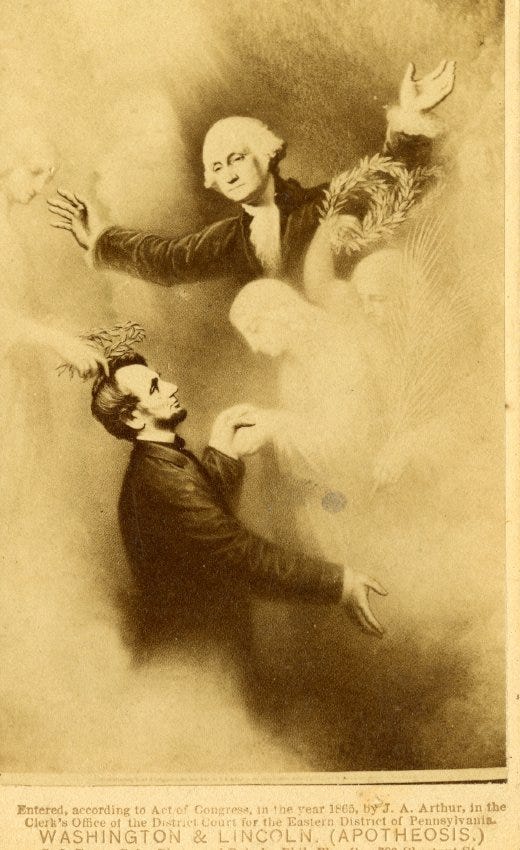
Be Lovers, not Haters.
Do the best that you can. We are all imperfect.
Focus on Healing and Helping.
Some people are more deserving of help than others: the weak, the vulnerable, and the wounded. (Perhaps all of us belong in those categories.)
He told us to be Peacemakers. But we can’t make peace by destroying our enemy. That only plants the seeds of the next conflict.
Lincoln reveals great wisdom here. If you reach the top by destroying others, someone will target you so they can get their trophy. Ask Lincoln, or better yet, ask John Wilkes Booth, as he shouted “Sic Semper Tyrannis.”
If you have reached this point in the article and share my fascination with the Gospel of Matthew and the Beatitudes, you may recognize the echo of Jesus’ words in Lincoln’s benediction.
“Blessed are the Peacemakers for they will see God.”
Can anyone who presided over such a terrible war be called a peacemaker?
Can we forgive Lincoln and Washington for being of their time?
Can we forgive ourselves for not striving enough for a just and peaceful world?
We know where the road to Harper’s Ferry ends: at an arms depot that John Brown and his men failed to seize, while sparking the Civil War. Yasgur’s Farm hosted a rock concert in 1968, and Joni Mitchell sang, “We've got to get ourselves
back to the garden.” Unfortunately, the path cannot lead us back to original innocence. We must struggle together towards an impossible goal, welcoming difference and grounding ourselves before taking the next step.